

A water tank is an important part of water storage systems in homes, commercial buildings, industrial facilities, agricultural locations, and construction sites. The right tank can support convenient water storage while helping maintain durability and hygiene over time. However, choosing the right product is not only about comparing prices. The quality of materials, construction, design, storage capacity, and manufacturing practices can all influence the performance of a water tank. Therefore, buyers should carefully evaluate water tank manufacturers before making a purchase.
Why Choosing the Right Water Tank Manufacturer Matters
The manufacturer you choose can have a direct impact on the quality and reliability of your water storage solution. Established water tank manufacturers generally provide products designed around specific applications, capacities, and installation requirements.
Product quality and consistency: Consistent manufacturing quality helps ensure that tanks perform as expected and have uniform construction.
Material quality: The material used should be appropriate for water storage and suitable for the intended environment. Material selection can influence durability, hygiene, and resistance to external conditions.
Durability and service life: A properly designed and manufactured tank should be capable of handling regular use and the environmental conditions where it is installed.
Water hygiene and safety: For tanks used to store water for domestic purposes, hygienic materials and suitable construction are important considerations.
Product availability: A manufacturer with a broad range of capacities and configurations can make it easier to select a tank for different requirements.
Installation and support: Product guidance, availability, and after-sales support can also be useful when installing or maintaining a water storage system.
Read More: How to Cool a Room Without AC
Key Factors to Consider When Choosing Water Tank Manufacturers
1. Quality of Materials
Material quality is one of the first factors to examine when purchasing a water tank. The material should be suitable for water storage and capable of handling the expected operating environment. Buyers should also consider resistance to weather conditions, physical impact, and regular handling. For domestic water storage, the suitability of the material for hygienic water storage is particularly important.
2. Tank Design and Construction
The structure of a tank affects its stability and durability. Look at features such as wall construction, layers, ribs, overall shape, and structural strength. A well-designed water tank should be appropriate for its intended installation and capacity. Multi-layer construction and ribbed designs may be used by manufacturers to provide additional structural support, depending on the product.
3. Storage Capacity Options
Choosing the right capacity depends on how the tank will be used. A household may have different requirements from a commercial building, agricultural facility, or industrial site. Consider the number of users, expected water consumption, frequency of water supply, available installation space, and intended application before selecting capacity.
Avoid choosing a tank based solely on the largest available size. The capacity should match the actual requirement while fitting comfortably within the available space.
4. UV and Weather Resistance
Water tanks installed outdoors are regularly exposed to sunlight, heat, rain, and changing weather conditions. Therefore, outdoor installations require a tank designed to withstand the surrounding environment. When comparing water tank manufacturers, check whether the product incorporates features intended to provide UV and weather resistance.
5. Hygiene and Water Safety
A water storage tank should support hygienic storage. Buyers should check the material used, the intended application of the product, and whether the manufacturer’s product information specifies suitability for water storage. A suitable design can also make cleaning and maintenance more manageable.
6. Product Range and Applications
Different projects require different storage solutions. Residential buildings may need smaller capacities, while commercial, agricultural, industrial, or construction applications may require larger tanks. Manufacturers offering multiple capacities, configurations, and designs can provide greater flexibility when selecting a product for a specific application.
7. Manufacturing Quality and Reliability
Before purchasing, research the manufacturer’s manufacturing experience, product consistency, quality-control approach, availability, and market reputation. Product documentation and technical information can also help buyers understand what they are purchasing. Rather than relying only on price, compare the product’s construction, features, capacity options, and suitability for the intended use.
How to Select the Right Water Tank for Your Requirements
Start by estimating the storage capacity required for your application. Next, consider where the tank will be installed and whether it will be exposed to direct sunlight or changing weather conditions.
The material and construction should match the expected usage. Buyers should also evaluate the number of layers, structural design, hygiene-related features, maintenance requirements, and available space. For larger projects, it is useful to compare product dimensions and capacity options with the installation area before finalising the purchase.
Most importantly, consider the reliability of the manufacturer. A water tank is a long-term investment, so product quality, consistency, availability, and manufacturer support should be considered alongside the initial purchase price.
Read More: 5 Tips For Farming Enthusiasts To Grow Vegetables At Home
APL Apollo Water Tanks – A Reliable Water Storage Solution
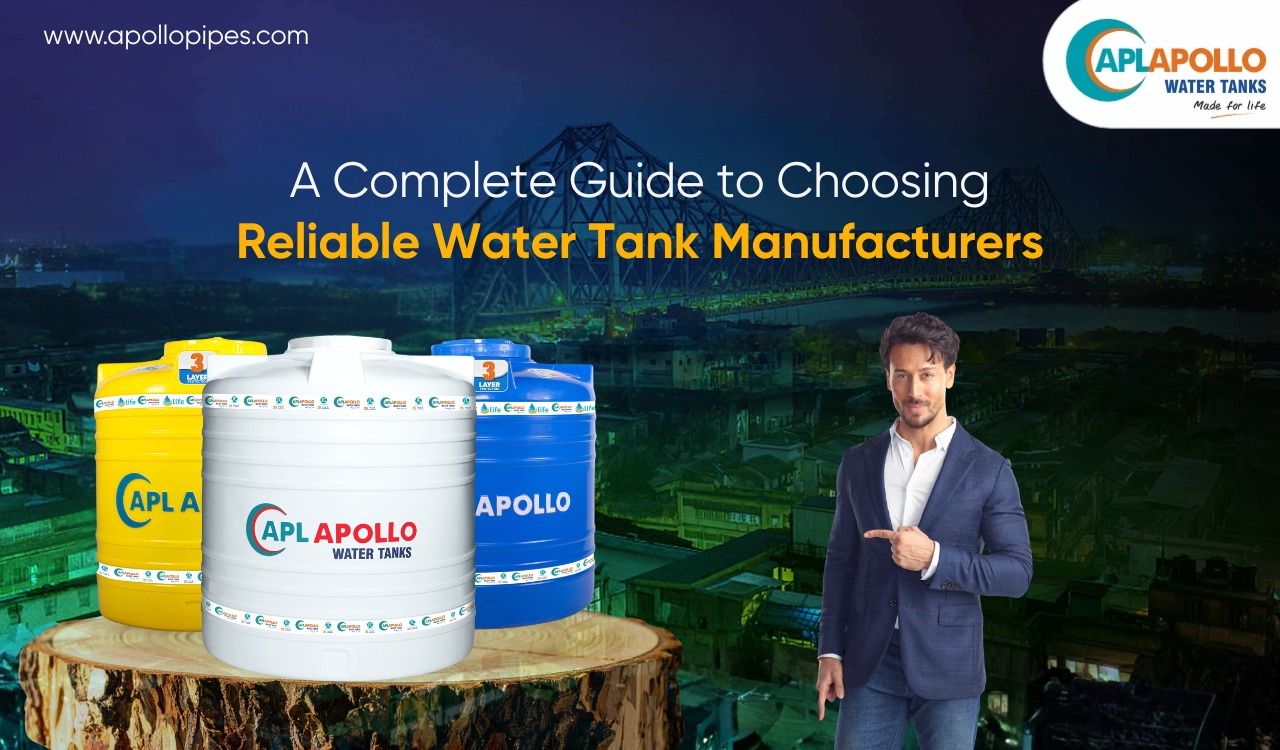
APL Apollo offers water storage tanks in 3-layer, 4-layer, and 5-layer configurations. According to the company’s official product page, these tanks are made using UV-stabilized materials and are described as impact resistant and weather proof. They are made from food-grade materials and are described as bacteria and fungus free. Listed features include easy assembly, extra durability, assured storage capacity, and multi-rib construction for lasting strength. The available capacities are 500 L, 700 L, 1000 L, 1500 L, 2000 L, 3000 L, 5000 L, 7500 L, and 10000 L, with colour options including white, black, yellow, green, and blue. The product page identifies applications across residential, commercial and industrial water storage, agriculture and irrigation, construction and job sites, and remote or off-grid locations.
Conclusion
Choosing a water tank should involve more than comparing prices. Buyers should evaluate material quality, construction, capacity, durability, hygiene, installation conditions, intended application, and the reliability of the manufacturer. By considering these factors carefully, homeowners, builders, facility managers, and commercial buyers can select a water storage solution that is appropriate for their specific requirements.